03 · Coaching capacity
Fourteen coaches were writing 15 hours of check-ins a week, one by one. Now each draft arrives in the coach's own voice. The coach approves. Nothing sends on its own.
The coaches, drawn
Fourteen coaches, each a voice line with its own rhythm. One engine drafts for every one of them. Top right, a coach's week of check-in writing.
Animated figure: fourteen voice lines, one per coach, run into a single drafting engine, which answers each coach with a draft in their own rhythm. Beside it, a coach's fifteen hours of weekly check-in writing compress to ten minutes, and the hours given back light up.
A drafting engine with 14 voice profiles
Cycle-aware, with injury and sensitivity flags
15h → 10 minCheck-in writing per coach, a week
14Voice profiles
The problem
We were becoming really supply-constrained.
The only way to take more clients was to hire. Hiring fast meant lowering the bar the clients were paying for.
Generic AI was worse than useless. A client who has trained with the same coach for a year knows their voice. A message that doesn't sound like them reads as one that wasn't written for them.
What we built
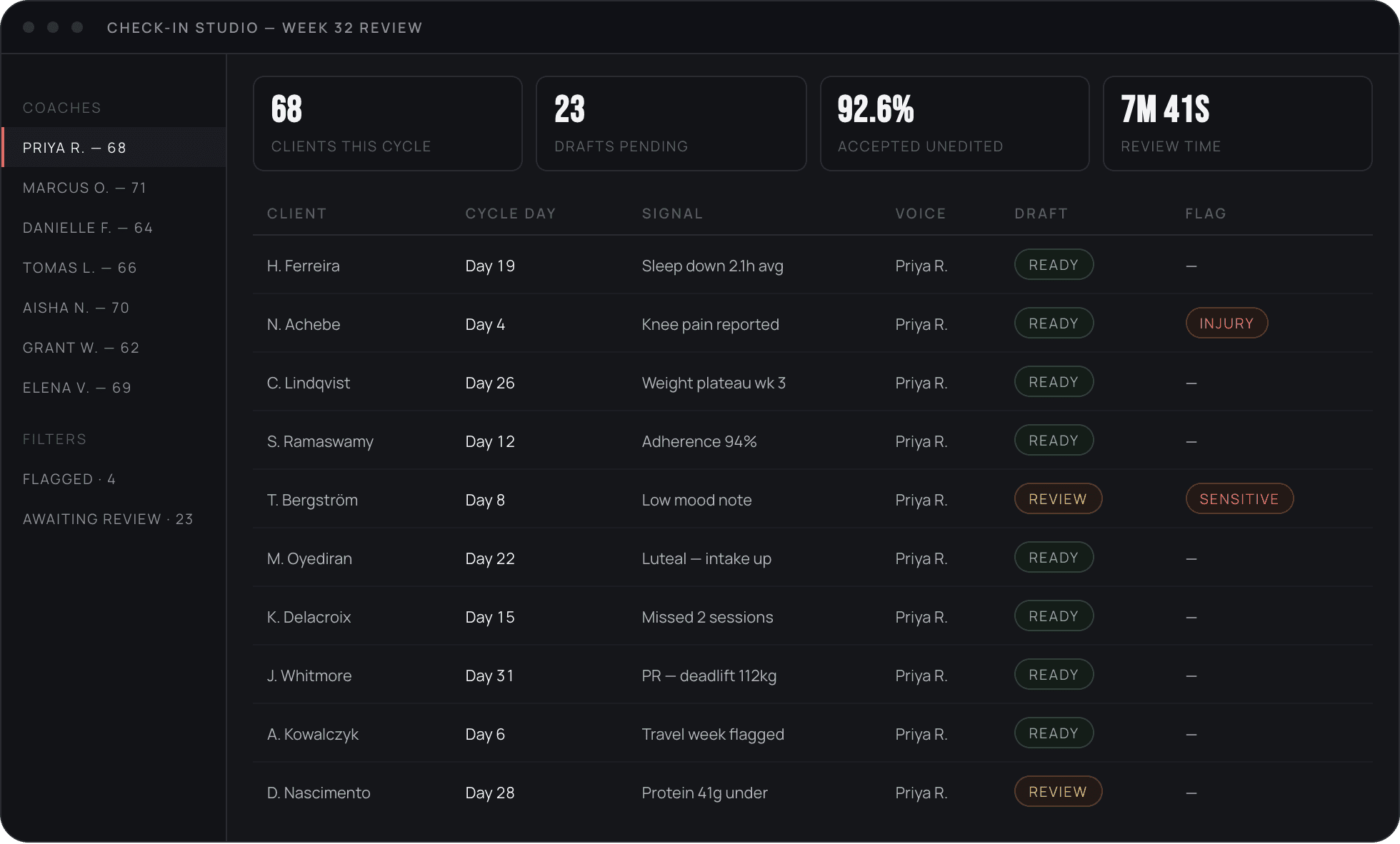
Each coach got a voice profile built from their own past replies, so drafts arrive in their phrasing, not a house style. The coach reviews and approves. Nothing sends on its own.
In
The engine
Human in the loop
Out
Out of the engine, straight to the coach
The result
90%+
Of drafts approved without an edit
280
Client slots opened without a hire
14 of 14
Coaches drafting this way
Most drafts go out as written. The coach's time goes to the ones that need a coach.
The client's words
These guys are professionals. They communicate exceptionally well.
Two minutes thirty-eight, in his own words, with captions.
What it means for you
Two weeks · $5,000